Specialist Tips for Matching Add-on With Men's Suits for a Polished Look
Attaining a polished look with men's suits needs mindful attention to accessory coordination. The best tie can elevate a suit, while a pocket square includes a touch of sophistication. Cufflinks, belts, and footwear need to show a unified style. Recognizing shade sychronisation is important to prevent usual mistakes. The subtleties of accessory pairing usually make the distinction between a dissimilar set and a sharp appearance. What are the crucial elements to contemplate for a truly fine-tuned aesthetic?
Picking the Right Connection for Your Suit
Choosing the best connection for a suit can substantially boost a guy's overall look (Men's Suits). The choice procedure starts with thinking about the suit's shade and pattern. Strong ties work well with patterned suits, while formed ties may complement strong suits, supplied the shades integrate. Next off, the textile plays a necessary role; silk connections exhibit style, while cotton or weaved alternatives can offer an extra informal vibe. A tie's width ought to straighten with the lapel of the fit for a cohesive look. Ultimately, the celebration issues; a service meeting might require conservative colors, whereas gatherings permit for bolder selections. Ultimately, an appropriate tie not just adds character however likewise mirrors a man's individual style and interest to detail
The Significance of Pocket Squares
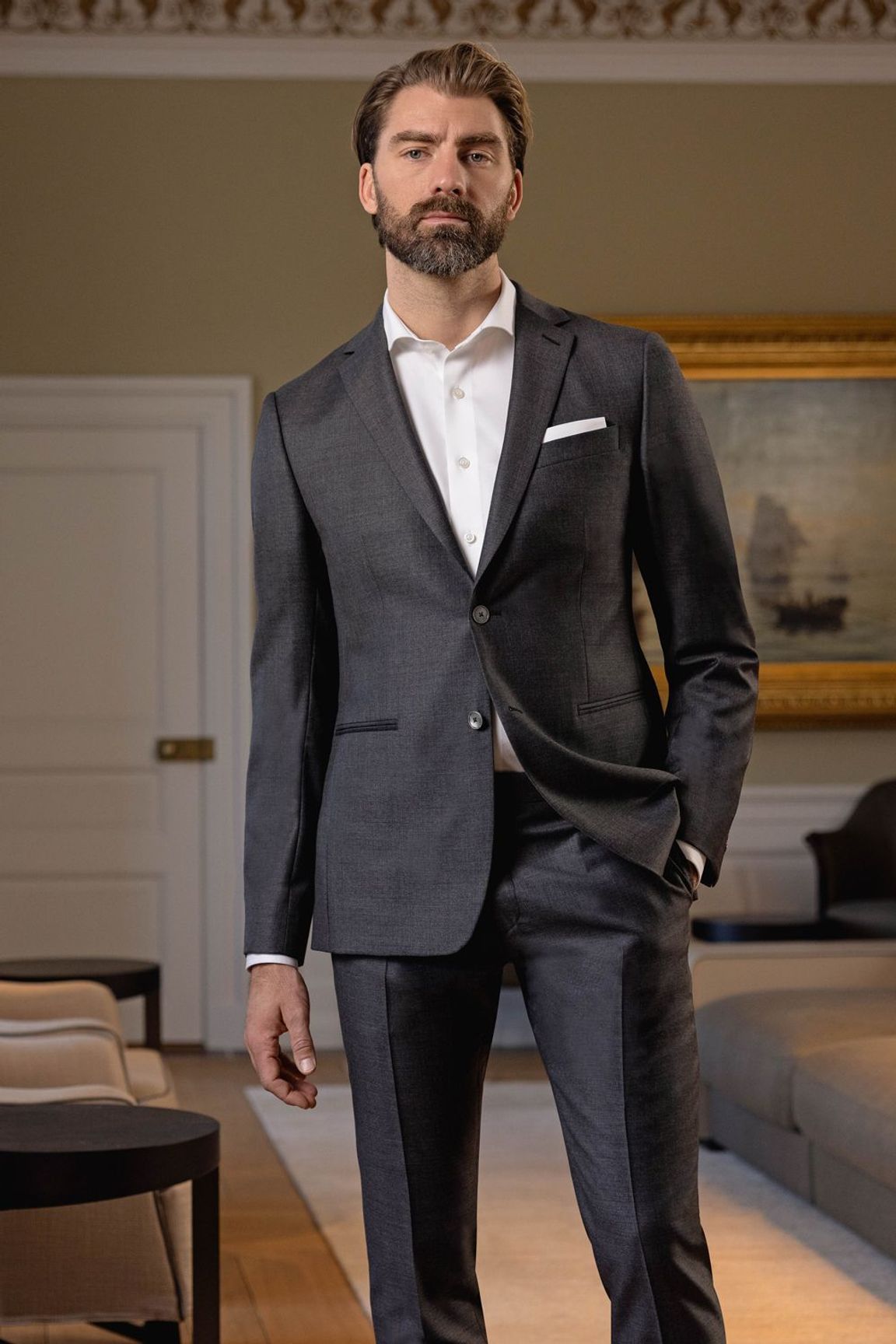
A well-selected tie can boost a suit, however the enhancement of a pocket square takes the set to one more degree of refinement. This little accessory serves not only as an elegant touch but also as a way of personal expression - Suits For Men. Pocket squares been available in numerous materials, shades, and patterns, allowing individuals to display their one-of-a-kind design while enhancing the total appearance. By balancing the pocket square with various other elements of the outfit, such as the connection or tee shirt, one can attain a natural look. Furthermore, the pocket square can soften the formal strength of a suit, making it ideal for both specialist and social settings. Inevitably, incorporating a pocket square mirrors focus to information and a dedication to polished discussion
Selecting Cufflinks That Complement Your Clothing
When choosing cufflinks, color coordination plays a crucial duty in improving the total ensemble. It is vital to select materials and layouts that balance with the fit and other accessories. This interest to information can elevate a man's attire from common to innovative.
Shade Control Fundamentals
Cufflinks work as a subtle yet impactful device that can raise a guy's match ensemble. When picking cufflinks, color sychronisation plays a significant role in achieving a sleek appearance. The trick is to choose hues that either complement or comparison the match and t shirt properly. For a traditional navy match, gold or silver cufflinks add a sophisticated touch, while a white t-shirt permits even more adventurous shades like deep wine red or emerald eco-friendly. When putting on a patterned tee shirt, it is recommended to select cufflinks that detect among the shirt's shades, ensuring a natural look. Ultimately, the goal is to enhance the general attire without frustrating it, making thoughtful shade options crucial for a polished appearance.
Product and Design Consistency

Matching Belts and Footwear for a Natural Look
To achieve a sleek and natural look, collaborating footwear and belts is essential in men's fashion. When picking a belt, it is essential to match its color and product to the shoes. As an example, a timeless black leather belt pairs well with black leather shoes, while a brownish belt enhances brown shoes. Furthermore, take into consideration the finish; matte belts must straighten with matte shoes, while shiny surfaces function best with each other. The width of the belt ought to additionally be in proportion to the footwear design; a slimmer belt suits official shoes, whereas a larger belt matches informal designs. Overall, maintaining consistency in between footwear and belts reinforces a well-put-together appearance, improving the general refinement of a male's suit ensemble.
Incorporating Watches as Statement Pieces

Comprehending Shade Control
How can one accomplish a harmonious appearance when it involves matching shades with men's suits? Understanding color coordination is necessary. A strong shade match, such as navy or charcoal, offers flexibility; devices can present corresponding tones. For example, a light blue connection can boost a navy match, while a burgundy connection gives an abundant comparison. Patterns also play a substantial duty; refined layouts like checks or pinstripes can include deepness without overwhelming the ensemble. Neutral colors, like beige or grey, can function as a structure, enabling bolder accessory colors to stand apart. Mens Suits. Eventually, the objective is to create a well balanced look that preserves a natural aesthetic, making sure that devices improve instead of sidetrack from the suit itself
Preventing Usual Device Mistakes
Numerous men unwittingly make common accessory errors that can diminish their overall look. One constant blunder is mismatching the levels of rule; coupling casual accessories with an official fit threatens the ensemble. Furthermore, over-accessorizing is an additional pitfall; too lots of components can develop aesthetic chaos and distract from find more information the fit itself. Color control is essential; accessories ought to match instead of encounter the match's scheme. Neglecting proper fit is also troublesome; ill-fitting accessories, such as large connections or improperly sized pocket squares, can show up careless. Ultimately, overlooking the celebration can bring about inappropriate choices, such as wearing flashy cufflinks to a conservative event. By being conscious of these typical errors, men can improve their polished appearance effectively.
Regularly Asked Inquiries
Just how Do I Select the Right Material for My Accessories?
Choosing the right textile for devices includes thinking about the suit's product, the celebration, and personal style. All-natural fibers like silk or cotton function well for formal looks, while blends can include adaptability and comfort.
Can I Mix Different Metals in My Devices?
Mixing different metals in accessories is appropriate and can create a trendy contrast. Equilibrium is crucial; picking corresponding tones and maintaining a cohesive overall look helps accomplish class without frustrating the attire (Suits For Men). Specific choices additionally contribute
What Designs of Ties Are Ideal for Informal vs. official Suits?
For official suits, silk incorporate refined patterns or solid colors are optimal. On the other hand, laid-back suits permit more lively styles, such as knit connections or vibrant patterns, boosting personal expression while keeping a natural appearance.
Are There Particular Guidelines for Matching Patterns in Accessories?
Yes, specific rules exist for matching patterns in devices. Suits For Men. Normally, it's a good idea to integrate one patterned thing with strong colors or to mix patterns of different ranges, making sure harmony without overwhelming the total appearance
Exactly How Can I Personalize My Devices Without Exaggerating It?
To individualize accessories without exaggerating it, one must choose refined colors, integrate meaningful icons, and mix textures attentively. This method permits uniqueness while keeping a sleek and cohesive look. Equilibrium is essential for effective personalization.
Strong ties function well with formed suits, while patterned connections may complement solid suits, supplied the colors integrate. A refined silver or gold pair matches an official match, while natural leather or material alternatives may match a much more informal look. When choosing a watch, one need to consider the fit's procedure; a sleek, minimalist layout functions well with customized suits, while a bold, complex watch can add style to even more informal attire. A solid color match, such as navy or charcoal, supplies flexibility; devices can introduce corresponding tones. Color coordination is necessary; devices should complement rather than clash with the fit's combination.